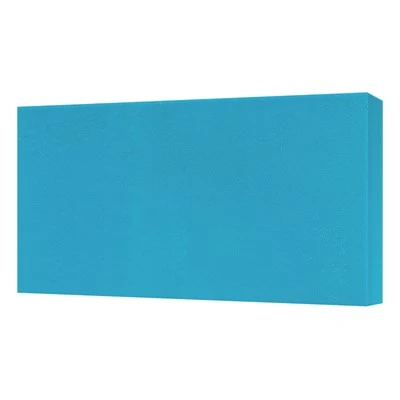


Smooth Surface XPS Foam Insulation Boards
Smooth Surface XPS Foam Insulation Boards are rigid extruded polystyrene panels used for thermal insulation in building applications. For building material importers, insulation distributors, contractors, and project procurement teams, selecting the right board requires checking thermal performance, compressive strength, surface compatibility, and project-specific requirements.
Product Overview
Smooth Surface Finish
A smooth board surface supports consistent product handling and installation. Confirm compatibility with the intended adhesive, coating, render, or waterproofing system before specifying the board.
Closed-Cell XPS Structure
Extruded polystyrene (XPS) is used in insulation assemblies where thermal resistance and moisture-related performance are important. Actual performance depends on the product grade, thickness, and verified technical properties.
Specification-Based Selection
Board thickness, thermal conductivity, compressive strength, dimensions, and edge profile should match the project specification rather than appearance alone.
Technical Specifications
Confirm the following parameters against the manufacturer's Technical Data Sheet (TDS) for the specific product grade.
|
Parameter |
Specification to Confirm |
|
Material |
Extruded polystyrene (XPS) |
|
Surface finish |
Smooth surface; confirm extrusion skin condition |
|
Board dimensions |
Standard and custom length × width |
|
Thickness |
Available thicknesses and dimensional tolerances |
|
Thermal conductivity |
Declared value in W/(m·K) and test conditions |
|
Compressive strength |
Declared value in kPa and test method |
|
Water absorption |
Test result under specified conditions |
|
Dimensional stability |
Declared result under specified test conditions |
|
Edge profile |
Square edge, shiplap, or tongue-and-groove, if available |
|
Fire performance |
Applicable classification supported by test documentation |
|
Product standards |
Applicable product standard and destination-market requirements |
Performance & Application Suitability
Thermal Insulation
Select board thickness according to the required thermal resistance, declared thermal conductivity, and building-envelope design.
Compressive Performance
For floors, roofs, and other loaded assemblies, assess compressive strength together with long-term creep, load duration, temperature, and project design requirements.
Moisture Resistance
Review water-absorption data and installation conditions. XPS insulation does not replace a properly designed waterproofing or drainage system.
Smooth-Surface Compatibility
Confirm adhesive compatibility, surface preparation, mechanical fixing, and installation requirements for the complete building assembly.
Typical Applications
Roof Insulation: Evaluate thermal requirements, imposed loads, and compatibility with the roof system.
Floor and Slab Insulation: Check load requirements, long-term creep performance, and thickness tolerances.
Foundation and Perimeter Insulation: Assess moisture exposure, soil pressure, waterproofing interfaces, and mechanical protection.
Final suitability should be confirmed against the project specification and applicable building regulations.
Quality Control & Compliance Documentation
Technical Data Sheet (TDS)
Review thermal conductivity, compressive strength, dimensions, thickness tolerances, water absorption, and applicable test methods.
Performance Test Reports
Request relevant test reports for specified properties. Check the product identification, test method, test conditions, and issuing laboratory.
Regulatory Documents
Confirm whether a Declaration of Performance (DoP), CE marking, fire classification, or other documents are applicable to the specific product and destination market.
Environmental Declarations
Request product-specific evidence for HBCD status, blowing-agent information, restricted substances, or other environmental requirements when needed. Do not assume these attributes without documentation.
Batch Inspection
Agree on inspection criteria for dimensions, thickness, surface condition, edge profile, packaging, and required performance tests. Confirm batch identification and traceability requirements where applicable.
Customization & Bulk Supply
Board Dimensions and Edge Profiles
Confirm available lengths, widths, thicknesses, tolerances, and edge configurations. Custom options are subject to manufacturing feasibility and written confirmation.
Packaging and Shipment
Specify bundle protection, pallet requirements, shipping marks, and destination packaging needs. Confirm loading quantities based on actual board dimensions and packaging.
Commercial Order Requirements
Confirm minimum order quantity (MOQ), production lead time, customization options, payment terms, and shipping arrangements before purchase approval.
Frequently Asked Questions
Q: What is the difference between smooth-surface and rough-surface XPS boards?
A: The main difference is the surface condition and its compatibility with the intended installation system. A smooth surface does not automatically guarantee better adhesion.
Q: How do I select the correct compressive strength?
A: Consider the application loads, load duration, temperature, long-term creep, and project design requirements. Do not select a board based on short-term compressive strength alone.
Q: How do I determine the required insulation thickness?
A: Use the required thermal resistance, declared thermal conductivity, and the overall building assembly design to determine the appropriate thickness.
Q: Can smooth-surface XPS boards be used with adhesives or waterproofing membranes?
A: Compatibility depends on the board surface and the selected installation system. Confirm the material manufacturer's instructions and required surface preparation before installation.
Q: What documents should I request before placing a bulk order?
A: Request the TDS, relevant performance test reports, applicable fire classification, and regulatory or environmental documents required for the destination market.
Q: What information is required for a quotation?
A: Provide board dimensions, thickness, performance requirements, application, quantity, destination, packaging preferences, and required compliance documents. Drawings or a bill of quantities (BOQ) can support a more accurate quotation.
Request a Quotation
Submit your required dimensions, thickness, thermal and compressive performance targets, intended application, order quantity, and destination market for a product-specific technical and commercial review.
Before order confirmation, request written confirmation of the proposed specification, available configurations, applicable documentation, packaging, MOQ, production lead time, and shipping terms.
Hot Tags: smooth surface xps foam insulation boards, China smooth surface xps foam insulation boards manufacturers, suppliers, factory, Custom Thickness Insulation Products, Durable Cement Coated Backer Boards